If you’re choosing between the Ooni Karu and Ooni Koda, you’re choosing between two excellent pizza oven ranges.
I’ve cooked on both. I’ve used the Koda and Karu in the smaller and larger sizes, and I’ve made a lot of pizzas in them over the years. So, this isn’t just a spec comparison. It’s what actually changes when you cook on gas-only versus multi-fuel.
The short version is this: the Koda is easier. The Karu is more flexible. Both make incredible pizza.
Editor’s note: Some of the earlier Koda and Karu models are still available at the time of writing, often at lower prices than the newer versions. That doesn’t mean there’s anything wrong with them. I’ve cooked on these ovens extensively, and they still make incredible pizza. The main thing is to compare the current price against the newer model and decide whether the updates are worth paying more for.
Burning Brisket is reader-supported. When you buy through links on our site, we may earn an affiliate commission. Read our affiliate policy to learn more.
Table of Contents
Quick Verdict
Both ovens make excellent pizza — the decision is whether you want gas-only simplicity or multi-fuel flexibility.
Choose Ooni Koda if:
- You want the easiest Ooni to use
- You mostly cook pizza
- You want less cleaning
- You want fast weeknight pizza
- You don’t care about wood or charcoal
Also available at: Amazon
Choose Ooni Karu if:
- You want wood, charcoal, and gas options
- You like cooking with real fire
- You cook in windy conditions
- You want to cook more than pizza
- You don’t mind extra setup and cleaning
Also available at: Amazon
Ooni Karu vs Koda: Key Differences
| Feature | Ooni Koda | Ooni Karu | Does It Matter? |
|---|---|---|---|
| Fuel type | Gas only | Wood, charcoal, or gas with burner attachment | Yes. This is the main reason to choose one over the other. |
| Ease of use | Easiest Ooni range to use | More hands-on | Yes, especially for regular weeknight pizza. |
| Pizza flavor | Excellent | Excellent, with more real-fire atmosphere | The taste difference is smaller than most people expect. |
| Wind performance | Open front means the flame can blow out | Door helps protect the flame | Yes if you cook somewhere windy. |
| Cooking other foods | Good, especially larger models | Better overall for varied cooking | Yes if you want more than pizza. |
| Cleaning | Minimal | Ash and chimney soot to deal with | Yes, although the Karu still isn’t hard to clean. |
| Gas burner | Built in | Separate attachment on many Karu models | Yes. Add this to the Karu’s total cost. |
| Door | No front door | Front door on Karu models | Yes. It changes heat retention, visibility, and wind protection. |
| Portability | Koda 2 and earlier Koda 12 are easiest to move | Karu 2/Karu 12 are portable, but have more parts and fuel considerations | Yes if you want to travel with it. |
| Ooni Connect | Compatible with Koda 2; included with Koda 2 Pro and Koda 2 Max | Compatible with Karu 2/Karu 12G and Karu 16; included with Karu 2 Pro | Useful for some cooks, but not a must-have for pizza. |
| Best reason to buy | Easy gas pizza | Fuel flexibility and real-fire cooking | This is the actual buying decision. |
What’s the Same?
This is where most people overthink it: both the Ooni Karu and Ooni Koda make excellent pizza.
Both ranges get hot enough for proper high-heat pizza. Both can cook pizza quickly. Both use a pizza stone. Both need some practice with launching, turning, and timing. And both are a massive step up from a regular kitchen oven.
The Karu does not automatically make dramatically better pizza just because it can burn wood.
Yes, wood fire gives you more of that authentic cooking experience. You get the smell of real fire, the process of managing the flame, and the feel of cooking in a proper outdoor oven.
But the pizza is only in there for about 60 seconds. That is not much time for the dough, cheese, and toppings to absorb a heavy smoky flavor.
I’ve put fresh pizza from the Karu and fresh pizza from the Koda side by side with family, and most people couldn’t definitively pick which one was which.
They definitely enjoyed both.
So, don’t buy the Karu because you think the pizza will taste hugely different. Buy the Karu because you want the fuel choice, the real-fire cooking experience, and the flexibility to cook with wood, charcoal, or gas.
What’s Different?
Fuel Choice
This is the biggest difference between the Ooni Karu and Ooni Koda.
The Koda is gas-only.
You connect it to gas, turn the knob, let it heat up, and start cooking. It works a lot like a gas barbecue, which is exactly why it’s so easy to use.

The Karu is multi-fuel.
You can use hardwood or charcoal out of the box. With the right gas burner attachment, you can also run it on gas.
That means the Karu gives you more ways to cook. You can do a wood-fired pizza night when you want the full experience, use charcoal for a steadier lower burn, or use gas when you want easy pizza without managing a fire.
But more options also means more setup.
If you only want gas, the Koda makes more sense. If you’ll genuinely use wood, charcoal, and gas, the Karu is the more flexible oven.

Ease of Use
The Koda is easier.
That is probably the strongest reason to buy it.
There’s no chimney to attach. There’s no firebox to empty. There’s no ash. There’s no managing wood. You just turn it on, wait for it to heat up, and cook.
The front is open too, so you can see what’s happening the whole time. Launching, turning, and removing pizzas feels straightforward because there’s nothing to move out of the way.
The Karu is not difficult, but it is more hands-on.
With wood or charcoal, you need to light the fire, get it burning properly, add fuel as needed, and keep an eye on the flame. If you’re using the gas burner, it becomes much more like the Koda, but switching between gas and wood/charcoal is not instant.
You can’t just leave the gas burner in place while burning wood or charcoal. You need to remove the gas burner and put the firebox setup back in when you want to switch fuels again.
That makes the Karu more versatile, but not as simple.
Flavor
This is the difference people often expect to be bigger than it is.
The Karu gives you the wood-fired cooking experience. You get the smell of hardwood, the visible fire, and that feeling that you’re cooking in a proper little outdoor oven.
But, in terms of the actual pizza flavor, the difference between the Karu and Koda is not huge.
Pizza cooks too quickly to take on a lot of smoke. It is not like smoking brisket for hours where the fuel choice has a massive impact on flavor.
With Ooni pizza, the dough, heat, timing, stone temperature, and toppings make a bigger difference than whether the oven is running on gas or wood.
I do love cooking with wood in the Karu. It feels more special. But I wouldn’t tell someone to buy the Karu only because they think the pizza will taste dramatically smokier.
If you want easy pizza, gas is enough.
If you want the process and atmosphere of real fire, the Karu gives you that.

Wind Performance
This is one of the practical differences that matters more than it sounds.
The Koda has an open front. That makes it easy to use, but it also means wind can blow through the cooking chamber.
When it’s windy, our Koda flame has blown out pretty easily. The gas burner does have a safety valve that shuts off the gas if the flame goes out, which is exactly what you want from a safety point of view.

But it still interrupts your cook.
If the flame goes out and you don’t notice quickly, the stone starts cooling down. Then your next pizza can cook differently. The base can take longer, the top can behave differently, and you lose that smooth rhythm once you’re cooking for a group.
The Karu’s door helps here.

Because the front door is closed while cooking, the flame is more protected and the oven holds heat better. For that reason alone, I’d seriously consider the Karu over the Koda if you live somewhere that gets really windy.
Cooking More Than Pizza
Most people buy an Ooni for pizza. That’s what we use ours for most of the time too.
But these are really outdoor ovens, and you can cook a lot more than pizza in them.
Steak, burgers, vegetables, bread, sides, and desserts are all possible. If you want to do that regularly, the larger ovens are easier to use because there’s more space and more head height between the stone and the flame.
That extra room makes it easier to control the heat and reduce burning.
The Karu is the better choice if cooking more than pizza is a big part of why you’re buying an oven.
The door helps hold heat in. The charcoal option gives you a steadier lower burn. And the larger Karu models feel more like proper outdoor ovens than just pizza ovens.
The larger Koda models can cook more than pizza too, especially the Koda 2 Pro and Koda 2 Max. But if I wanted one oven for pizza, meat, bread, vegetables, and real-fire cooking, I’d lean Karu.
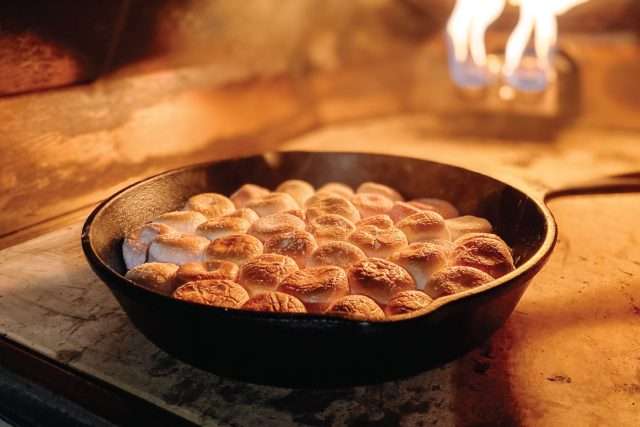
Just don’t put wet foods like meat or vegetables directly on the pizza stone.
The cordierite stone is porous, so moisture can soak in and make it more likely to crack later. Use cast iron for meat, vegetables, and anything with moisture or fat.
Size and Current Model Options
The current Ooni Koda and Karu ranges are easier to understand if you think about them by fuel first, then size.
The Koda range is the gas-only range. It currently includes the smaller Koda 2, the larger Koda 2 Pro, and the huge Koda 2 Max.
The Karu range is the multi-fuel range. It currently includes the smaller Karu 2 and the larger Karu 2 Pro.
So, if you want gas simplicity, you’re looking at the Koda range. If you want wood, charcoal, and gas flexibility, you’re looking at the Karu range.
Some of the earlier, first generation Koda and Karu models are still available at the time of writing, often at lower prices than the newer versions.
The Koda and Karu 12’s are slightly smaller than the second generation verisons. And then there’s the larger Koda 16 and Karu 16. I’ve cooked on them all extensively, and if the price saving is meaningful, they can absolutely still be worth buying.
The main thing is to compare the current price against the newer model. If the older model is much cheaper and suits how you cook, I wouldn’t avoid it. If the price is close, look carefully at what the newer model gives you before deciding.
The newer Koda and Karu models also bring Ooni Connect into the lineup. It’s included with some of the larger newer models and compatible as an add-on with some smaller ones, so it’s more of a current-model choice than a Koda vs Karu difference.
Portability
If portability matters, stick with the smaller ovens.
The Koda 2 is the easiest current Koda to move around because it keeps the simple gas-only setup. There’s no chimney, no firebox, no ash, and fewer parts to pack. Just keep in mind, you’ll be taking a gas bottle too.
The Karu 2 can still be portable too, but it’s a little more involved. You’ve got the chimney, door, wood or charcoal fuel, and firebox setup to think about. It’s not hard to move, but it’s not as clean and simple as taking a gas oven.
The larger models are better treated as backyard ovens with a regular setup spot.
The Koda 2 Pro and Karu 2 Pro are still movable if you need to shift them, but I wouldn’t buy either one if portability was the main goal. The Koda 2 Max is in a different category again. That’s a big backyard cooking setup, not something you want to be moving around often.
If you still find the earlier Koda 12 or Karu 12 available, those are even more portable because of their smaller size.
The Koda 12 is the simplest portable gas option. The Karu 12 is the smaller portable multi-fuel option. Both still make excellent pizza, so if portability and price matter more than having the newest version, they can still make a lot of sense.

If you want the easiest portable setup, go Koda.
If you want portable multi-fuel cooking and don’t mind the extra parts, go Karu.
Cleaning
The Koda is lower maintenance.
Because it runs on gas, there’s no ash to empty and no soot building up in a chimney. Most of your cleaning is just keeping the stone and inside of the oven clean.
Ooni recommends running the oven hot now and then to burn off excess flour or food. Once the oven is completely cool, you can brush or scrape off stuck debris and wipe things down if needed.
Flipping the stone every now and then helps it wear evenly. Cooking on the other side naturally helps clean it too.
The Karu needs a little more cleaning because you’re burning real fuel.
You’ll need to empty ash from the firebox when needed. It’s not a huge job, and it’s actually surprising how little ash the Karu produces when you’re using good kiln-dried hardwood.

You’ll also want to wipe soot out of the chimney occasionally with a dry paper towel or cloth. That helps keep things cleaner and reduces the chance of soot buildup causing a little chimney fire.
The Karu is not high maintenance. But compared with the Koda, there is more to clean.
Price and Value
The Koda usually makes the most sense if you want the easiest and cleanest way to make excellent pizza.
You’re not paying extra for fuel flexibility you might not use. You don’t need to add a gas burner. You don’t have ash or soot to clean up. And you’re more likely to use it often because the whole process is simple.
That matters.
The best pizza oven isn’t necessarily the one with the most features. It’s the one you’ll actually use.
The Karu costs more if you want the full multi-fuel setup with gas as well. The oven can burn wood and charcoal out of the box, but the gas burner is usually an extra cost.
So, if you buy the Karu and add the gas burner, your total cost can end up higher than buying a Koda.

What you’re paying for is not dramatically better pizza. You’re paying for flexibility.
You’re paying for the option to cook with hardwood, use charcoal for steadier heat, add gas when you want convenience, cook more types of food, and have a door that helps in windier conditions.
That’s worth it if you’ll actually use those options.
If you’ll mostly leave the Karu on gas and never really cook with wood or charcoal, I’d buy the Koda instead.
Real Cooking Experience
Cooking on the Ooni Koda
Cooking on the Koda is as easy as Ooni cooking gets.
You connect the gas, turn the knob, let it heat up, and start cooking. There’s no fire to manage and no fuel to add once you’re going.
The open front makes it easy to see what’s happening. You can watch the side of the crust closest to the flame start to brown and bubble, then turn the pizza before it burns.
You still need to stay with it. These pizzas cook fast. You’re not walking away for five minutes while dinner takes care of itself.
On most Oonis, we generally do 2–3 turns per pizza. On the larger size Koda’s, you can often get away with 1–2 turns because the L-shaped burner heats from the back and side instead of just one direction.
That makes the larger Koda easier to cook on than the smaller Koda 12. You get more room to turn the pizza, and the heat pattern is more forgiving.
Read more about our experience with both in the Ooni Koda 12 Review and the Ooni Koda 16 Review.

The Koda is also the easiest to clean afterwards.
Once the oven has cooled, there’s no ash to empty and no chimney soot to deal with. You’re mostly brushing off the stone and wiping down anything that needs it.
The main downside is wind.
Because the front is open, wind can blow the flame out. The safety shutoff is good, but if you don’t notice quickly, the stone starts cooling and the next pizza won’t cook the same.
Still, if I were recommending one Ooni to most people who just want regular pizza nights, I’d choose the Koda.
It is simple, fast, and easy to use often.

Cooking on the Ooni Karu
Cooking on the Karu feels more like cooking with a real fire.
With hardwood, you’re lighting small pieces of kiln-dried wood, getting the fire established, and adding more fuel to keep the flame rolling. With charcoal, you get a steadier, lower burn that’s useful if you’re cooking something other than pizza.
When I’m using a charcoal and hardwood mix, I like to get the charcoal going first to create a more stable fire. Then I add pieces of hardwood to boost the temperature and get the flame moving properly.
That gives you more control, but it also means you’re more involved.
The Karu is not hard to use. It just asks more of you than the Koda does.

The door makes a big difference to the experience.
On the regular Karu 12, the door is solid and removable. It works fine, but you need somewhere safe to put it down while you launch, turn, or remove your pizza. I’ve put it down on a timber table without damaging anything, but it is still another thing to think about.
Because the door is solid, you can’t see what’s happening while it’s closed. You end up counting seconds and checking the pizza regularly until you get a feel for the timing.
Our Ooni Karu 12 review has more details on what this model is really like to use.

The Karu models with glass doors are easier because you can see what’s happening without opening the door all the time. That makes cooking feel more relaxed, especially while you’re learning.
The Karu 16 I’ve used feels like a proper outdoor oven. The glass door is useful, the built-in temperature gauge is handy, and the larger cooking space makes it easier to cook more than pizza. You can read all about our experience with this model in our Ooni Karu 16 review.

The newer Karu 2 Pro looks very similar in concept to the Karu 16. I haven’t cooked on the Karu 2 Pro, so I’m not calling this a hands-on Karu 2 Pro review. But the main appeal looks the same: a larger multi-fuel oven with a glass door, good visibility, and more of a proper outdoor oven feel.
If you add the gas burner to the Karu, it becomes much more convenient. It’s great for entertaining or midweek pizza when you don’t want to think about managing the fire.
But it’s not instant to swap between wood/charcoal and gas. You need to change the setup at the back of the oven, so you’re probably going to choose one fuel for the night rather than constantly switching.
The Karu is the better oven if you like the process.
If you want to light a fire, smell the wood, use charcoal, cook other foods, and have more control over how you run the oven, the Karu is much more satisfying than the Koda.
If you just want easy pizza, it’s more work than you need.
Pizza Results and Flavor
Both Make Excellent Pizza
I am absolutely in love with Ooni pizza.
Before I bought my first Ooni, I’d never made or stretched dough before. I’d bought pizza bases and baked them in the oven, but that was about it.
It took me a few goes to feel confident, but once you get the hang of it, the results are genuinely good.
Pizza has become a weekly tradition at our place. It’s also one of our go-to meals when we’re entertaining.
Both the Karu and Koda make proper pizza.
The bases are crispy without turning into crispbread. The toppings cook properly without drying out. The cheese melts beautifully. And the whole thing tastes so much better than anything I can make in a regular kitchen oven.

In my opinion, it beats every takeaway pizza place in my city.
Frozen pizza doesn’t even belong in the same conversation.
You can do classic Neapolitan-style pizza, but you can also play around with New York-style, Detroit-style, sourdough pizza, deeper dish pizzas, and whatever else you want to try.
The bigger models make that easier, but even the smaller ovens are capable of a lot once you get used to them.
Wood-Fired Flavor Is Smaller Than You’d Think
It’s fair to assume that the wood-fired Karu will make pizza that tastes a lot more wood-fired than the gas-powered Koda.
But in real life, the difference is smaller than most people expect.
The pizza is only in the oven for about 60 seconds. That’s not much time for it to absorb a strong smoky flavor.
Yes, there can be a slight difference.
And yes, cooking with wood gives you that smell in the air and that whole real-fire feeling while you’re cooking.
I love that part of it.
But when I put fresh pizza from the Karu and fresh pizza from the Koda side by side, most people in my extended family couldn’t definitively pick which one was which.
They enjoyed both.
So, if you’re choosing the Karu because you think the pizza will taste dramatically smokier, I’d lower that expectation.
The Karu is worth buying for the fuel flexibility and cooking experience, not because the pizza is automatically much better.
Ooni Karu vs Koda: Which Should You Choose?

Choose Ooni Koda if:
- You want the easiest Ooni to use
- You don’t want ash or soot cleanup
- You prefer gas barbecue-style simplicity
- You want fewer parts
- You don’t care about cooking with wood or charcoal
Skip Ooni Koda if:
- You cook somewhere very windy
- You want a real wood-fired cooking experience
- You want to use charcoal for lower, steadier heat
- You want the most flexible setup
- You want versatility
Also available at: Amazon

Choose Ooni Karu if:
- You want flexibility
- You enjoy cooking with real fire
- You cook in windy conditions
- You don’t mind a little more setup and cleaning
- You like the idea of a proper outdoor oven
Skip Ooni Karu if:
- You want the easiest possible setup
- You don’t want to manage fire
- You won’t use wood or charcoal
- You want the lowest-maintenance option
- You expect dramatically smokier pizza
Also available at: Amazon
Which Current Model Should You Buy?
Once you know whether you want the gas-only Koda or the multi-fuel Karu, the model choice mostly comes down to size, price, and whether the newer features are worth paying more for.
The Koda range is the gas range. The Karu range is the multi-fuel range. That’s still the main decision.
Some of the earlier Koda and Karu models are still available at the time of writing, often at lower prices than the newer versions. They still make darn good pizza too, so if the price saving is meaningful, they can absolutely be worth considering.
Ooni Koda Gas Models
🔥 BEST COMPACT GAS OPTION
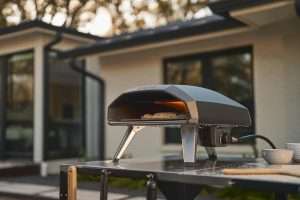
IF YOU WANT: The easiest gas Ooni for regular pizza nights. It’s simple, fast, and best for people who want excellent pizza without managing fire or ash.
🍕 BEST LARGER GAS OPTION
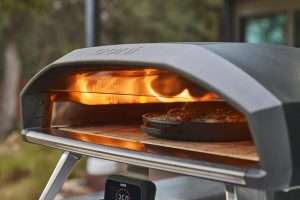
IF YOU WANT: A larger gas oven with more room to launch, turn, and cook pizzas. This is the better choice for families and entertaining.
🏡 BEST HUGE BACKYARD SETUP
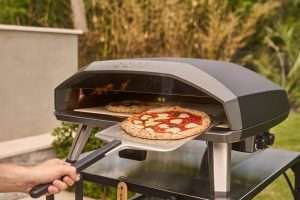
IF YOU WANT: The biggest gas Ooni. Best for outdoor kitchen setups, big gatherings, and people who want maximum space more than portability.
💰 BEST COMPACT LOWER-PRICED GAS OPTION

IF YOU WANT: A smaller gas Ooni at a lower price. It’s simple, compact, and easy to use.
💰 BEST LARGER LOWER-PRICED GAS OPTION

IF YOU WANT: A larger gas Ooni at a lower price than the newer large Koda models.
Ooni Karu Multi-Fuel Models
🔥 BEST COMPACT MULTI-FUEL OPTION
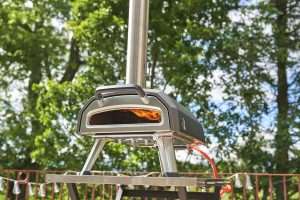
IF YOU WANT: A smaller multi-fuel Ooni that can cook with wood, charcoal, or gas with the right burner. Best if you want more flexibility than the Koda but don’t need the biggest oven.
🏆 BEST LARGER MULTI-FUEL OPTION
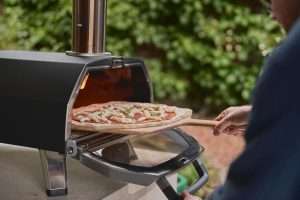
IF YOU WANT: The most capable Karu setup. Best if you want more cooking space, a glass door, fuel flexibility, and an oven that feels more like a proper outdoor oven.
💰 BEST LOWER-PRICED MULTI-FUEL

IF YOU WANT: Multi-fuel cooking at a lower price. It’s more basic than the newer Karu models, but it still makes incredible pizza and is a smart buy if the price is right.
Final Verdict
For most people, I’d recommend the Ooni Koda.
It’s the easiest, cleanest, simplest way to make incredible pizza at home. You turn it on, let it heat up, cook your pizza, and you’re done.
If your main goal is regular pizza nights without extra work, the Koda makes the most sense.
But the Karu is the one I’d choose if you genuinely want multi-fuel cooking.
If you like cooking with wood or charcoal, want better wind protection, want to cook more than pizza, or want the flexibility to choose gas one night and real fire the next, the Karu is worth it.
Just don’t buy the Karu because you think the pizza will taste dramatically smokier.
Buy it because you want the experience and flexibility.
Both ovens make excellent pizza. The best choice comes down to how you want to cook.
If you want easy, go Koda.
If you want flexible and more hands-on, go Karu.
For more help choosing between Ooni models, see my:
If you’re deciding whether an electric Ooni would suit you better, my Ooni Volt 12 review is worth reading too.
FAQs About the Ooni Karu vs Koda
What is the difference between Ooni Koda and Karu?
The Ooni Koda is gas-powered only. It’s the easiest and cleanest Ooni range to use.
The Ooni Karu is multi-fuel. It can cook with wood or charcoal out of the box, and it can run on gas with the right gas burner attachment.
The biggest difference is not pizza quality. It’s how involved you want the cooking process to be.
Does Ooni Karu pizza taste better than Ooni Koda pizza?
Not dramatically.
The Karu gives you more of a real wood-fired cooking experience, and the smell of the wood fire is great while you’re cooking. But the pizza is only in the oven for about 60 seconds, so it doesn’t absorb a huge smoky flavor.
In my side-by-side tasting, most people couldn’t clearly pick which pizza came from the Karu and which came from the Koda.
Is Ooni gas or wood better?
Gas is better if you want easy pizza with less mess.
Wood is better if you enjoy the process of cooking with real fire.
For most weeknight pizza nights, gas is easier. For the full outdoor cooking experience, wood is more fun.
Is the Ooni Karu worth it?
The Ooni Karu is worth it if you’ll actually use the fuel options.
If you want to cook with wood, charcoal, and gas, or you want to cook more than pizza, the Karu makes sense.
If you’re only going to use gas, the Koda is probably the better buy.
Which Ooni is easiest to use?
The Ooni Koda is the easiest to use.
It works like a gas barbecue. Turn it on, let it heat up, cook your pizza, and clean up is minimal.
Which Ooni is best in windy conditions?
I’d choose the Karu if you cook somewhere windy.
The Koda’s open front makes it easier for wind to blow out the flame. The Karu has a front door, which helps protect the flame and hold heat inside the oven.
What size Ooni should I buy?
The smaller models are enough for many couples and families. They’re easier to store, easier to move, and work well for individual pizzas.
The larger models are better for big families, entertaining, and cooking more than pizza. You can cook fewer, larger pizzas, and the extra room makes turning and handling food easier.
Should I buy the earlier Ooni models or the newer versions?
Some of the earlier Koda and Karu models are still available at the time of writing, often at lower prices than the newer versions.
I wouldn’t avoid them just because newer models exist. They still make incredible pizza.
But compare current prices before you buy. If the earlier model is meaningfully cheaper, it can still be a smart buy. If the price is close, look carefully at what the newer model adds.
Is Ooni Connect worth it?
Ooni Connect can be useful if you want app alerts, food probe readings, or cook tracking.
I think it makes more sense if you’re cooking meat or using one of the larger ovens like a proper outdoor oven.
For pizza, I wouldn’t treat it as essential. Pizza cooks quickly, and you’re usually standing beside the oven anyway, turning it and taking it out around the 60-second mark.

Kate Brown is the founder of Burning Brisket, where she shares hands-on smoker reviews, barbecue gear guides, and practical tips for backyard BBQ. She has cooked extensively on charcoal, pellet, electric, and kamado smokers, using real-world experience to help beginners choose the right equipment and make better barbecue at home. Her focus is honest, straightforward advice that makes smoking and grilling easier without unnecessary complexity.