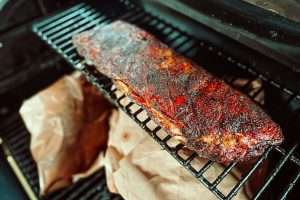
I’ve cooked on regular offset smokers and spent a lot of time looking at whether reverse flow is actually worth chasing. And while reverse flow smokers are really popular, I don’t think the answer is as simple as “reverse flow is better.”
Both designs are still offset smokers. You’re still managing a live fire, burning wood or charcoal, and cooking with heat and smoke moving through a separate cooking chamber. But they do feel different to cook on.
A reverse flow smoker is generally more even and forgiving. A regular offset gives you more natural heat zones, cleaner top-down heat, and a more traditional stick burner feel. This guide breaks down the real difference so you can decide which one actually suits how you want to cook.
Burning Brisket is reader-supported. When you buy through links on our site, we may earn an affiliate commission. Read our affiliate policy to learn more.
Quick Verdict
Reverse flow smokers are easier to manage across the grate. Regular offset smokers give you more control, cleaner airflow, and a more traditional BBQ result.
Choose a reverse flow offset if:
- You want more even temperatures across the cooking chamber
- You don’t want to move meat around as much during the cook
- You’re newer to offset cooking and want something a bit more forgiving
- You regularly cook larger cuts and want steadier heat underneath the meat
Choose a regular offset smoker if:
- You want the cleanest wood smoke flavour
- You like having hotter and cooler zones to work with
- You care about bark and top-down heat on brisket and ribs
- You want the classic offset smoker experience
Table of Contents
Quick Comparison: Reverse Flow Smoker vs Offset
If you just want the quick differences, this is the easiest way to see how they compare.
| Category | Reverse Flow Smoker | Regular Offset Smoker |
|---|---|---|
| Best for | More even low-and-slow smoking | Traditional stick burner BBQ |
| Smoke path | Heat and smoke travel under a baffle, then back across the meat | Heat and smoke move directly across the cooking chamber |
| Smoking flavour | Good wood smoke, but slightly less direct | Cleanest, most direct offset smoke |
| Heat consistency | More even from end to end | More obvious hot and cool zones |
| Cooking space | More of the grate runs at a similar temperature | Placement matters more across the grate |
| Effort during cook | Less rotating and zone management | More active use of hot and cool zones |
| Learning curve | Still takes fire management, but fewer grate hot spots to learn | Fire management plus learning your heat zones |
| Grill setup | Depends on the model | Depends on the model |
| Best fit | You want a more forgiving offset | You want the classic offset experience |
If you’re still debating fuel types, this guide on offset vs pellet smoker is worth a look as well.
They’re More Similar Than You Think
Both reverse flow smokers and regular offset smokers can make excellent barbecue.
You’re not choosing between good food and bad food. You’re choosing between two different ways of controlling heat and smoke inside an offset smoker.
The fire management still matters more than the airflow design. A badly built reverse flow smoker won’t magically cook better than a well-built regular offset. And a regular offset won’t taste better if you’re running a dirty fire.
So, the real question is:
Do you want an offset that helps even out the cooking chamber, or do you want the more traditional feel and flexibility of a regular offset?
Reverse Flow Smoker vs Offset: Key Differences
Flavor and Smoke Quality
This is one of the biggest reasons I still lean toward a regular offset.
In a standard offset smoker, the heat and smoke move from the firebox, across the cooking chamber, and out the chimney on the opposite side. The fire gets plenty of oxygen, and when it’s running properly, you get that clean, thin smoke that makes offset barbecue so good.
A reverse flow smoker changes that path. The heat and smoke travel under a steel baffle plate first, move to the far end of the smoker, then come back across the meat before exiting through a chimney near the firebox side.
The easiest way to understand the difference is to look at how the heat and smoke move through each smoker.
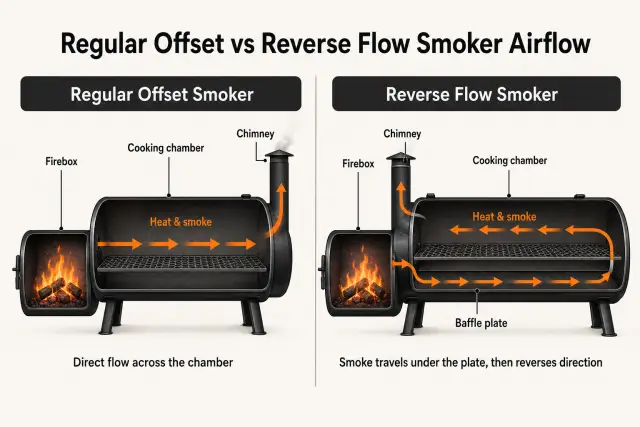
That design helps even out the heat, but it also changes how the smoke moves. I wouldn’t say reverse flow smokers make bad smoke. They don’t. But the regular offset setup gives you the cleanest, most direct wood-burning feel.
If brisket is your main goal, I still prefer the way a regular offset cooks from the top down. The bark and fat rendering can be better when the heat is moving naturally across the top of the meat instead of being pushed and held under a baffle first.
How Much Work It Takes
Neither of these are set-and-forget smokers.
You’re still managing a fire. You’re still adding wood or charcoal. You’re still watching the stack, checking temperatures, and adjusting airflow.
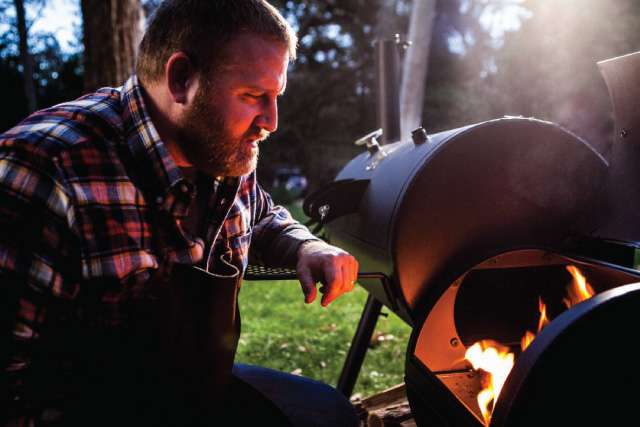
But a reverse flow smoker can make the cooking chamber itself easier to live with. Because the baffle plate helps spread heat more evenly, you usually don’t have to shuffle meat around as much. That can be a big advantage if you’re cooking brisket, pork butts, or several racks of ribs and don’t want one side racing ahead.
A regular offset takes more learning. The firebox side usually runs hotter, and the far side usually runs cooler. At first, that can feel like a problem. But once you know your smoker, those zones become useful.
I like being able to put thicker pieces closer to the firebox, move smaller pieces away from the heat, or use the cooler end when something is cooking faster than expected.
So reverse flow is easier. Regular offset gives you more control.
Cooking Capacity
Reverse flow smokers can give you more usable cooking space if you want the whole grate to run at a similar temperature.
That’s one of their biggest advantages.
On a regular offset, the whole cooking grate might technically be available, but the heat isn’t the same from end to end. The firebox side is hotter. The chimney side is cooler. Depending on what you’re cooking, that can mean rotating meat or being careful where you place things.
On a reverse flow smoker, the baffle plate evens things out. That makes more of the grate useful for cooking the same type of food at the same pace.
If you’re loading up a smoker with pork butts or briskets and want them all to cook fairly evenly, reverse flow makes sense.
But if you like having different heat zones, a regular offset is more flexible.
Heat Control and Consistency
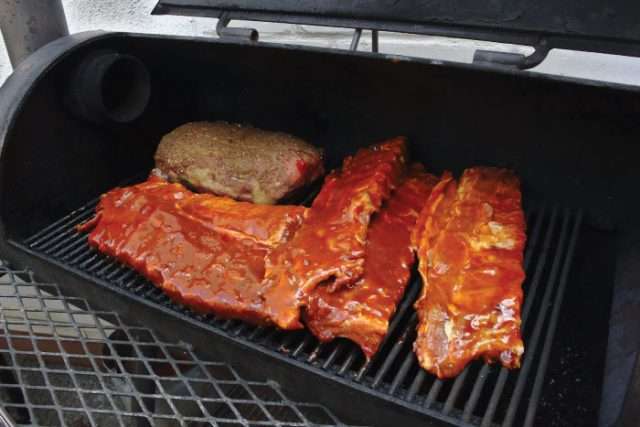
Reverse flow smokers are popular because they solve one of the biggest complaints about offsets: uneven heat.
The baffle plate acts like a heat sink. It absorbs and spreads heat before the smoke and air come back over the food. That helps reduce hot spots and temperature swings across the grate.
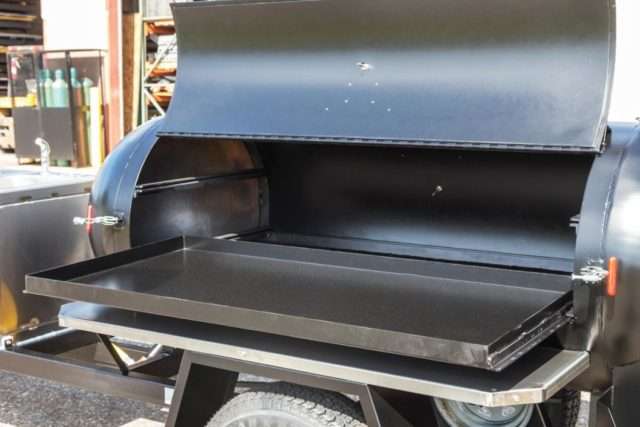
It can also help the smoker recover after you open the lid because there’s a lot of hot metal sitting underneath the cooking chamber.
That does make reverse flow smokers feel more stable.
But there’s a trade-off. That same baffle can hold a lot of heat low in the smoker. Depending on the design, you can end up with strong heat coming from underneath the meat. That’s not always what I want for brisket, especially if the underside starts drying out or cooking harder than the top.
With a regular offset, the temperature difference across the grate is more obvious. But the heat is moving more directly from the firebox, across the meat, and out the stack. It feels simpler and more natural once you understand it.
Learning Curve
The learning curve is similar with both types because they’re both still offset smokers.
You still need to learn how to build and maintain a clean fire, how your smoker responds when you add another split of wood, how far to open the firebox vents, and how quickly temperatures recover after opening the lid.
A reverse flow smoker doesn’t remove that part of the learning curve. You’re still cooking with a live fire, and you still need to understand airflow.
Where reverse flow does make things easier is across the cooking grate. Because the baffle plate helps even out the heat, you don’t have to learn the hot and cool zones in the same way. There’s less guesswork around where to place brisket, ribs, or pork butts, and less need to rotate meat just because one side of the smoker is running hotter.
A regular offset takes more learning in that specific area. You need to understand where the firebox side runs hotter, how strong that difference is, and how to use those zones instead of fighting them.
So, reverse flow isn’t beginner-proof. It just removes one of the trickier parts of learning a regular offset: managing temperature variation across the grill.
Real Cooking Experience
Cooking on either of these still feels like offset cooking.
You’re managing a live fire, watching the smoke, adding wood or charcoal, adjusting airflow, and checking how the smoker responds throughout the cook. Neither one is the type of smoker you can light, walk away from for hours, and expect it to hold itself perfectly.
That’s why I wouldn’t describe a reverse flow smoker as easy. It’s easier in one specific way: you don’t have to think as much about heat zones across the grate.
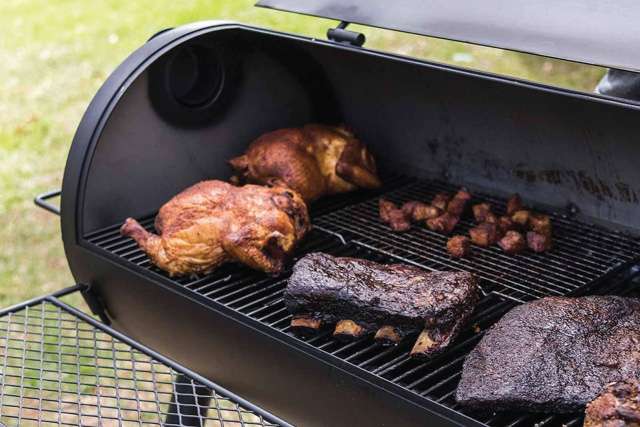
On a regular offset, the firebox side usually runs hotter. That means you need to learn where your smoker’s hot and cool spots are, where to place different cuts, and when to rotate food during the cook. That can be useful once you understand it, but it is another thing to manage.
With a reverse flow smoker, the baffle plate helps even the heat out before it comes back across the food. So, while you’re still managing the fire just as carefully, you’re not also compensating as much for one side of the smoker running hotter than the other.
That’s the real difference.
A regular offset gives you more natural heat zones to work with. A reverse flow smoker gives you a more consistent cooking chamber so food placement matters a bit less.
For brisket, ribs, and pork butts, that can make the cook feel more predictable. But it doesn’t remove the skill from offset cooking. You still need to run a clean fire, understand your vents, and pay attention to the smoker.

Reverse Flow vs Offset: Which One Should You Choose?
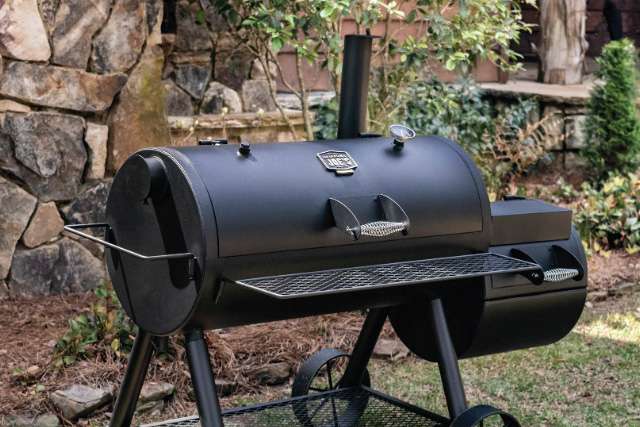
Choose a reverse flow if:
- You want steadier temperatures across the cooking chamber
- You don’t want to think about hot and cool zones
- You often cook several similar cuts at once
- You want a slightly more forgiving offset setup
Skip a reverse flow if:
- You want the most traditional offset experience
- You like using hot and cool zones during a cook
- You want the cleanest, most direct smoke path
- You’ve found a better-built regular offset for the same money

Choose a regular offset if:
- You want the classic stick burner experience
- You like learning and managing the smoker
- You want to use different heat zones during a cook
- You care most about direct airflow, bark, and traditional offset flavour
Skip a regular offset if:
- Uneven grate temperatures would annoy you
- You don’t want to think about meat placement
- You cook several of the same cut and want them to finish evenly
- You want the most forgiving version of an offset smoker
Buying Advice (Quick Guide)
If you’re choosing between reverse flow and regular offset, don’t make the decision based on airflow alone.
Build quality matters more.
A heavy, well-built regular offset will usually be better to cook on than a thin, leaky reverse flow smoker. And a good reverse flow smoker will be much easier to manage than a cheap offset that struggles to hold heat and leaks smoke everywhere.
The things I’d focus on first are:
- thick enough steel to hold heat
- good airflow through the firebox and chimney
- enough cooking space for how you actually cook
- doors that seal reasonably well
- a layout that makes fire management easy
- a smoker you’ll actually enjoy using
After that, think about how you like to cook.
If you want a more even cooking chamber and don’t want to rotate meat as much, reverse flow makes sense.
If you like the idea of using hot and cool zones, moving food around, and cooking on a more traditional stick burner layout, a regular offset is probably the better fit.
There can be differences between individual smokers, but that usually comes down more to the model, build quality, firebox design, and how you run the fire than whether it’s reverse flow or regular flow.
If you’re shopping by budget, these guides are useful next:
Recommended Reverse Flow and Regular Offset Smokers
If you’ve figured out which type suits you better, these are the smokers I’d start with based on budget and how serious you are about cooking.
Reverse Flow Offset Smokers
Good starting point if you want to try reverse flow without spending a lot.
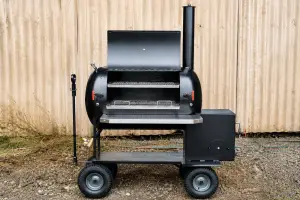
Serious reverse flow smoker for people who want a heavier, more stable long-term pit.
Regular Offset Smokers
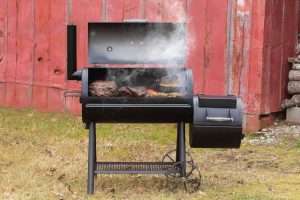
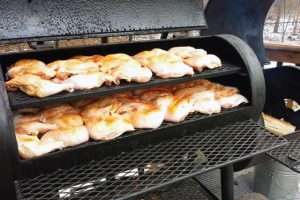
Also see the: Best Offset Smokers Under $1000 | Best Offset Smokers Under $500
Final Thoughts
A reverse flow smoker is not the easy version of an offset smoker.
You’re still managing a live fire, feeding the firebox, watching the smoke, and adjusting airflow throughout the cook.
The real benefit is that reverse flow helps even out the cooking chamber. That means less thinking about hot and cool zones, less rotating food, and more consistent results across the grate.
A regular offset gives you the more traditional stick burner experience. The heat moves more directly from the firebox, across the meat, and out the stack. You’ll have more noticeable temperature variation across the grate, but once you understand it, those zones can be useful.
If I had to choose one for my own backyard, I’d still lean regular offset because I like the direct airflow, the traditional feel, and the ability to use different heat zones.
But reverse flow smokers are popular for a reason. If you want an offset that feels more even and predictable once the fire is running, reverse flow makes a lot of sense.
Either way, the most important thing is buying a well-built smoker and learning how it responds to your fire.
FAQs About the Reverse Flow Smoker vs Offset
What is the difference between a reverse flow smoker and a regular offset smoker?
A regular offset smoker moves heat and smoke from the firebox, across the cooking chamber, and out the chimney on the opposite side.
A reverse flow smoker sends heat and smoke under a baffle plate first, then back across the cooking grates before it exits through a chimney near the firebox side.
The reverse flow design is usually more even across the grate. The regular offset design gives you a more direct smoke path and more natural hot and cool zones.
Is reverse flow better than a regular offset smoker?
Reverse flow is better if you want steadier temperatures across the cooking chamber.
But I don’t think it’s automatically better overall. A regular offset gives you a more traditional smoke path, more obvious heat zones, and a classic stick burner feel.
It depends whether you care more about evenness or heat-zone control.
Are reverse flow smokers easier to use?
A little, but only in one specific way.
You still need to manage the fire, airflow, wood, smoke, and temperature. Reverse flow doesn’t make offset cooking set-and-forget.
What it does do is reduce the amount of temperature variation across the grate. That means you don’t need to think as much about where to place meat or when to rotate it.
Are regular offset smokers harder to learn?
Not massively, because both types take real fire management.
The extra learning with a regular offset is mostly about heat zones. You need to learn where the smoker runs hotter, where it runs cooler, and how to use that during a cook.
Some people find that annoying. Others like the extra control.
Can you use a reverse flow smoker as a regular offset?
Some models allow this, depending on the baffle and chimney setup.
For example, some backyard reverse flow offsets are designed with removable baffles or optional chimney positions. But not every reverse flow smoker works that way, so check the specific model before buying.
Can you grill on a reverse flow smoker?
Sometimes, but it depends on the model.
Some reverse flow smokers and regular offsets include charcoal grates, removable plates, or firebox grates that let you grill with charcoal. But reverse flow vs regular flow isn’t the main thing that decides grilling ability. The specific smoker design matters more.
Which gives better bark: reverse flow or regular offset?
I prefer the bark from a regular offset.
That’s mostly because of the cleaner, more direct airflow and the way the heat moves across the meat from the firebox to the chimney. Reverse flow smokers can still build good bark, but the cooking style feels a little more even and less direct.

Jared Brown is a barbecue enthusiast with hands-on experience across a wide range of grills, smokers, and outdoor cooking setups. He enjoys testing different styles of barbecue and helping readers choose equipment that suits the way they actually want to cook, rather than chasing a one-size-fits-all answer. His practical, open-minded approach makes him a trusted voice for backyard cooks looking for honest guidance and better results.