Pellet smokers and electric smokers both plug into power, but they are very different to cook on.
An electric smoker uses an electric heating element to hold temperature, then relies on wood chips or chunks for smoke. A pellet smoker uses electricity too, but the heat and smoke come from a real hardwood pellet fire.
That difference matters. A pellet smoker gives you better smoke flavor, better bark, more versatility, and a more genuine barbecue result. An electric smoker is cheaper, compact, simple to run, and still has a place — especially if you want a dedicated smoker for fish, chicken, or lighter smoke foods.
Burning Brisket is reader-supported. When you buy through links on our site, we may earn an affiliate commission. Read our affiliate policy to learn more.
Quick Verdict
Pellet smokers make better barbecue. Electric smokers are cheaper and simpler, but they don’t give you the same wood-fired flavor, bark, or versatility.
Choose a pellet smoker if:
- You want better smoke flavor and bark
- You want something closer to real wood-fired barbecue
- You want to smoke, roast, bake, and sometimes grill
- You want a more genuinely set-and-forget smoker
- You’re happy to spend more upfront
Choose an electric if:
- You want the cheapest easy smoker
- You’re mainly smoking fish, chicken, or lighter foods
- You want a compact smoker with no real fire
- You don’t care about strong bark
- You’re happy to add wood chips during the cook
Table of Contents
Quick Comparison: Pellet Smoker vs Electric Smoker
If you just want the quick differences, this is the easiest way to see how they compare.
| Category | Pellet Smoker | Electric Smoker |
|---|---|---|
| Best for | Better barbecue with real wood smoke | Cheap, simple low-and-slow smoking |
| Heat source | Hardwood pellet fire | Electric heating element |
| Smoke source | Burning hardwood pellets | Smouldering wood chips or chunks |
| Flavor | Stronger, cleaner BBQ flavor | Lighter smoke flavor |
| Bark | Much better bark | Softer exterior, weaker bark |
| Ease of use | Very easy, mostly set-and-forget | Easy, but needs wood chip top-ups |
| Versatility | Smoke, roast, bake, grill on some models | Mostly smoking only |
| Cooking capacity | Medium to XL | Medium to large |
| Cold weather | Better options available | Many struggle more in cold weather |
| Build quality | Usually better, even on budget models | Often cheaper and more lightly built |
| Running cost | Higher due to pellets | Lower |
| Upfront cost | More expensive | Cheaper |
If you’re still debating fuel types, this guide on offset vs pellet smoker is worth a look as well.
They’re More Similar Than You Think
Pellet smokers and electric smokers both appeal to people who want an easier way to smoke meat.
You don’t have to manage a charcoal fire like you do on a drum smoker, kamado, or offset. Both have automatic temperature control. Both can hold a steady low-and-slow temperature. Both can cook a decent amount of food at once.
But they are not the same type of cooker.
The big difference is where the heat and smoke come from.
A pellet smoker is still cooking with a real wood fire. An electric smoker is closer to a small outdoor oven that uses wood chips for smoke.
That difference shows up in the flavor, bark, smoke quality, and how useful each smoker is beyond low-and-slow cooking.
Pellet Smoker vs Electric Smoker: Key Differences
Heat Source
The biggest difference is the heat source.
An electric smoker uses an electric heating element, similar to the element in an oven. You set the temperature, the element heats the box, and the smoker cycles on and off to hold that temperature.
A pellet smoker uses electricity differently. The power runs the controller, fan, igniter, and auger. The auger feeds hardwood pellets from the hopper into a small firepot, where they burn and create both heat and smoke.
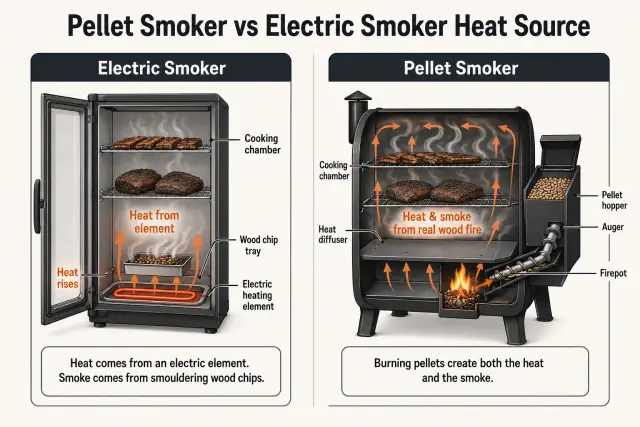
So even though both smokers need electricity, only one of them is actually cooking with a real wood fire.
That’s why the results are different.
An electric smoker can make moist, lightly smoked food. But it can’t produce the same barbecue flavor and bark you get from combustion. A pellet smoker gets much closer to traditional barbecue because the food is being cooked by heat and smoke from burning wood.
Smoke Flavor
Pellet smokers produce better smoke flavor.
The smoke comes naturally from the hardwood pellet fire. It’s not as strong as a traditional offset smoker, but it’s clean, steady, and gives meat a proper barbecue flavor.

Electric smokers produce smoke by heating wood chips or chunks in a tray above the element. The chips smoulder rather than burn in the same way as a real fire.
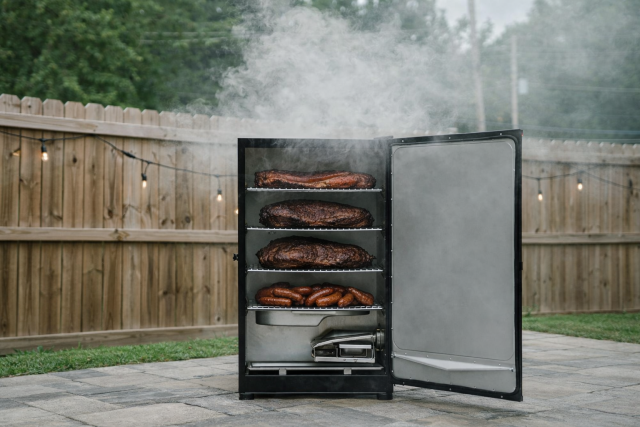
That smoke can still flavor food, but it’s lighter and not as good as the smoke you get from burning wood pellets.
This is especially obvious on brisket, ribs, and pork butt. You can still make decent food in an electric smoker, but the result usually tastes lighter and less barbecue-like.
For fish, that lighter smoke is actually one of the reasons I like electric smokers. Salmon doesn’t need a heavy smoke profile, and the moist cooking environment works really well.
Bark and Texture
This is where electric smokers fall behind.
Bark is the dark, flavorful crust that forms on smoked meat. It’s one of my favorite parts of smoked barbecue, and it’s one of the easiest ways to tell the difference between meat cooked in a pellet smoker and meat cooked in an electric smoker.
Pellet smokers can build good bark because they’re cooking with fire, airflow, and real wood smoke.

Electric smokers tend to keep meat softer and more moist on the outside. That’s not always bad. My kids actually prefer meat this way because they don’t like crispier edges or a stronger bark.
But if you’re chasing brisket, ribs, or pork with a proper barbecue exterior, a pellet smoker is the better choice.
With an electric smoker, it’s not that you’re doing anything wrong. It’s just not the same cooking environment.
Set-and-Forget Cooking
Pellet smokers are more set-and-forget than electric smokers.
That surprises people, because electric smokers are often sold as the easy option. And they are easy in terms of temperature control.
But the smoke is the problem.
In a lot of electric smokers, you need to add wood chips every 45 minutes to an hour if you want steady smoke. With something like the East Oak 30-inch, the larger chip tray can stretch that to around 2 to 2.5 hours. Some higher-end models can use chunks and run longer too.

But most electric smokers still need you to remember to add wood.
If you forget, you’re basically baking meat low and slow in a warm box.
A pellet smoker doesn’t work like that. Once it’s started, the auger keeps feeding pellets automatically. The fire keeps producing smoke and heat as long as there are pellets in the hopper.
You still need to check the cook, wrap meat if you want to, and pull it when it’s done. But for actual smoke production, pellet smokers are the more hands-off option.
Ease of Use
Both are easy, but they’re easy in different ways.
An electric smoker is very simple. Set the temperature, load the food, add wood chips, and let the element do the work. There’s no fire to light and not much to learn.
But you do need to stay on top of the chips if smoke flavor matters.
A pellet smoker has a little more going on mechanically, but using one is still very straightforward. Follow the startup process, set the temperature, load the food, and let the controller feed pellets as needed.
For most backyard cooks, I’d actually call the pellet smoker easier overall because you’re not manually topping up the smoke source all day.
Both still need a meat thermometer. Cook to temperature, not just time. That matters whether you’re using pellets, chips, charcoal, or an offset.
Versatility
Electric smokers are mostly one-purpose machines.
They’re built for low-and-slow smoking. Most don’t reach high temperatures, and they’re not designed for grilling, roasting, baking, or searing.
That’s fine if all you want is a dedicated smoker.
I actually like that for fish. I don’t mind having an electric smoker that’s mainly used for salmon because it keeps that fishy smell and residue away from my other barbecues. The lighter smoke and moist environment work really well for that type of cooking.
Pellet smokers are much more versatile.
They can smoke, roast, bake, and depending on the model, grill as well. Some pellet grills are better at grilling than others. On many models, grilling is more like cooking in a very hot oven than searing directly over flame.
But as an all-round backyard barbecue, pellet smokers do a lot more.
Cold Weather Performance
Electric smokers can struggle more in cold weather.
Most have some insulation, but a lot of them are still fairly thin, basic boxes. I notice the difference between smoking in summer and smoking in colder weather. The smoker can take longer to get up to temperature, and the temperature can fluctuate more once it’s running.
Opening the door also hurts more in the cold. You lose heat quickly, and the element has to work to recover.
Pellet smokers can be affected by cold weather too, especially cheaper or thinner models. But there are more options with better insulation, heavier lids, insulated blankets, and stronger temperature control.
If you smoke in proper winter conditions, pellet smokers give you more choices.
For more options, see Best Pellet Smokers for Cold Weather.
Build Quality
Most electric smokers are built to a lower price point.
I’ve used and tested a lot of electric smokers over the years, and they often get banged up pretty quickly even when you’re trying to be careful. The thin metal sides dent easily, the trays tarnish, and the racks are usually basic chrome-coated wire.
You can still get a good life out of one if you keep it dry and treat it gently. But most electric smokers need to be kept out of the rain and handled with care.
Pellet smokers are generally stronger.
Even cheaper pellet smokers usually feel more substantial than cheap electric smokers. The metal is often thicker, the racks are better, and the overall barbecue feels more like something built for regular outdoor cooking.
That doesn’t mean every pellet smoker is amazing. But as a category, pellet smokers usually feel better built.
Cost
Electric smokers are cheaper to buy and cheaper to run.
That’s one of the biggest reasons people look at them. You can get a usable electric smoker for much less than a good pellet smoker, and the running costs are low because you’re only using electricity and a handful of wood chips.
Pellet smokers cost more upfront and you’ll need to keep buying pellets. They also take up more space than most electric smokers.
But you’re getting a much more capable barbecue.
For me, the extra cost of a pellet smoker makes sense if you want to cook brisket, ribs, pork butt, chicken, sausages, and everyday barbecue. The results are better, and the smoker is more useful across more types of cooking.
An electric smoker makes more sense if budget is the main factor, or if you specifically want light smoke without spending pellet smoker money.
Real Cooking Experience
Using an electric smoker feels very controlled, but not completely hands-off.
The temperature control is easy. You set it, let the element heat up, and load the food. I hardly ever use water in the water pan because I don’t have problems with meat drying out as long as I cook to temperature instead of time.
The main thing you have to manage is smoke.
On a basic electric smoker, I expect to add wood chips every 45 minutes to an hour if I want smoke throughout the cook. That’s the part that stops it from feeling truly set-and-forget. The smoker will keep heating without you, but the smoke won’t keep coming unless there’s wood there to smoulder.
The food from an electric smoker is usually moist, softer on the outside, and lighter in smoke flavor. That’s not my favorite for brisket or pork, but it works really well for hot smoked salmon and other foods where I don’t want a heavy bark or stronger smoke.

Using a pellet smoker feels more like real barbecue with a lot less work than charcoal or an offset.
You still need to plug it in, follow the startup process, and make sure there are pellets in the hopper. But once it’s running, it feeds its own fire and holds the temperature automatically.
That’s why I think pellet smokers are one of the easiest smoker types to use. You’re getting heat and smoke from a real hardwood fire, but without constantly adjusting vents or adding fuel by hand.
The results are much better for classic barbecue. Brisket, ribs, pork butt, chicken, and sausages all come out with stronger smoke flavor and better bark than they do in an electric smoker.

For me, the only time I really prefer electric over pellet is fish. For almost everything else, I’d rather cook on pellets.
Pellet Smoker vs Electric Smoker: Which One Should You Choose?
Choose a pellet smoker if:
- You want better smoke flavor
- You care about bark
- You want wood-fired flavor
- You want a set-and-forget experience
- You’re happy to spend more upfront
- You want to grill as well
Skip a pellet smoker if:
- You want the cheapest smoker possible
- You want large cooking capacity compared to footprint
- You don’t want to buy pellets
- You mainly smoke fish and prefer a lighter result

Choose an electric smoker if:
- You want a cheap and simple smoker
- You don’t want a real fire
- You mainly smoke fish, chicken, or lighter foods
- You like moist meat
- You’re happy adding wood chips mid cook
- You need something compact
Skip an electric smoker if:
- You want proper barbecue bark
- You want stronger wood smoke flavor
- You don’t want to top up wood chips
- You want to grill as well
- You want a smoker that feels more solid and long-term
Buying Advice: What to Look For
Once you know whether pellet or electric makes more sense for you, the next step is choosing a good model.
For a pellet smoker, I’d focus on steady temperature control, enough cooking space, and a design that’s easy to live with. You don’t need the most expensive pellet grill to get much better barbecue than an electric smoker, but I would avoid the absolute cheapest models if the build feels flimsy or the controller looks very basic.
The main things to look for in a pellet smoker are:
- steady temperature control
- enough hopper capacity for longer cooks
- cooking space that matches how much food you usually make
- decent build quality
- easy grease and ash cleanout
- WiFi if you want remote monitoring
- a layout that suits how you cook, especially if you want to grill as well as smoke
For an electric smoker, I’d pay more attention to build quality, insulation, and how often you’ll need to add wood chips. A cheap electric smoker can still work well, but some feel very light and need to be kept dry and handled gently.
The main things to look for in an electric smoker are:
- digital temperature control
- a side-loading wood chip tray
- enough rack space
- better insulation if you smoke in cold weather
- a design that keeps electronics protected from rain
- easy-to-clean trays and racks
- a larger chip tray if you want longer smoke time between refills
One thing I wouldn’t do is buy an electric smoker expecting it to perform like a pellet grill. They’re different tools. Electric smokers are best when you want cheap, simple, moist, lighter-smoke cooking. Pellet smokers are the better buy if you want more traditional barbecue results.
If budget is the biggest factor, these guides are useful next:
Recommended Pellet and Electric Smokers
These are the smokers I’d start with based on budget and how serious you are about cooking.
This isn’t meant to replace the full buying guides. It’s just a quick starting point.
Pellet Smokers

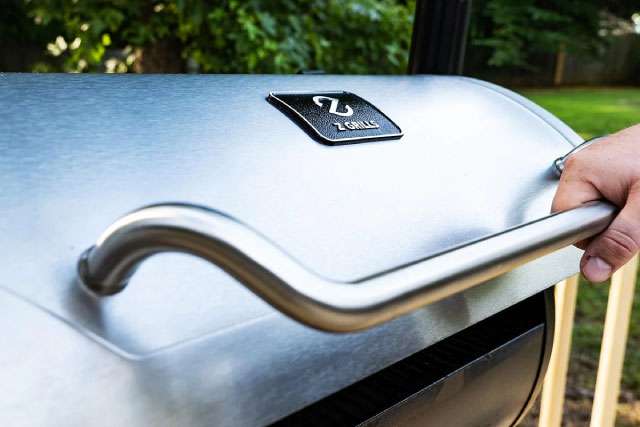
My top pick if you want better barbecue than an electric smoker without spending premium money.

The one I’d choose if you want the same strong Z Grills value with WiFi control built in.
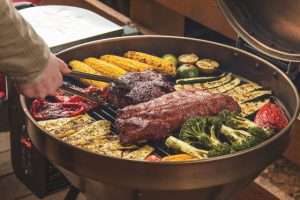
Worth considering if you want a pellet smoker that’s more useful for grilling as well as low-and-slow.
Also see the: Best Value Pellet Smokers | Best Pellet Smokers Under $500
Electric Smokers

The electric smoker I’d start with if you want a cheap, proven, beginner-friendly way to smoke food.
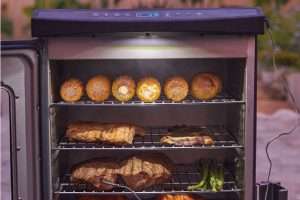
The one I’d choose if you want better insulation, a viewing door, and a larger wood chip tray.
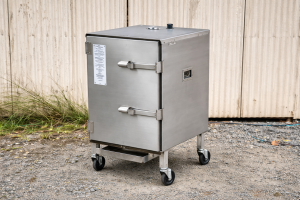
The electric smoker I’d look at if you want better quality and insulation than the usual budget electric boxes.
Also see the: Best Electric Smokers Under $300
Final Thoughts
Pellet smokers are better for most people.
They make better barbecue, produce better smoke flavor, build better bark, and are more versatile. They also feel more set-and-forget because the smoker keeps feeding the fire automatically instead of relying on you to keep adding wood chips.
Electric smokers are still useful.
They’re cheaper, compact, simple, and good for foods where you want lighter smoke and a softer texture. I still like them for fish, especially hot smoked salmon.
But if I had to choose one smoker for general backyard barbecue, I’d choose a pellet smoker every time.
The only reason I’d choose electric first is if I wanted the cheapest possible smoker, didn’t want a real fire, or specifically wanted a simpler dedicated smoker for lighter smoke foods.
FAQs
Are pellet smokers better than electric smokers?
Yes, for most barbecue.
Pellet smokers produce better smoke flavor, better bark, and a more traditional barbecue result because they cook with a real hardwood pellet fire.
Electric smokers are cheaper and simpler, but the food is usually softer, lighter in smoke flavor, and doesn’t get the same bark.
Is an electric smoker as good as a pellet smoker?
Not for classic barbecue.
An electric smoker can make good moist food, and it’s especially useful for fish. But it doesn’t produce the same wood-fired flavor or bark as a pellet smoker.
Are pellet smokers really set-and-forget?
Mostly, yes.
You still need to start them properly, make sure there are pellets in the hopper, monitor the cook, and pull the meat when it’s done. But the smoker feeds pellets automatically, so you don’t need to manually add wood for smoke throughout the cook.
Are electric smokers set-and-forget?
Not completely.
The temperature control is easy, but most electric smokers still need wood chips added regularly if you want steady smoke. In many models, that means topping up every 45 minutes to an hour.
Can you grill on an electric smoker?
No, not really.
Electric smokers are designed for low-and-slow smoking. Most don’t get hot enough or have the right setup for grilling.
Can you grill on a pellet smoker?
Yes, but it depends on the model.
Many pellet smokers can reach higher temperatures and work for grilling, but some are better at it than others. On a lot of pellet grills, grilling feels more like cooking in a very hot oven than searing over direct flame.
Do electric smokers produce less smoke?
They usually produce lighter smoke.
Electric smokers rely on smouldering wood chips or chunks, while pellet smokers burn hardwood pellets in a firepot. That difference gives pellet smokers a stronger barbecue flavor.
How often do you add wood chips to an electric smoker?
On many electric smokers, around every 45 minutes to an hour.
Some models have larger wood chip trays and can go longer. The East Oak 30-inch, for example, can stretch that to around 2 to 2.5 hours.
Are electric smokers worth it?
Yes, if you understand what they’re good at.
They’re worth it if you want a cheap, easy, compact smoker for lighter smoke foods, especially fish, chicken, or smaller cooks where you don’t need heavy bark.
But if you want classic barbecue flavor, bark, and more versatility, a pellet smoker is the better buy.

Kate Brown is the founder of Burning Brisket, where she shares hands-on smoker reviews, barbecue gear guides, and practical tips for backyard BBQ. She has cooked extensively on charcoal, pellet, electric, and kamado smokers, using real-world experience to help beginners choose the right equipment and make better barbecue at home. Her focus is honest, straightforward advice that makes smoking and grilling easier without unnecessary complexity.